Monday, April 1, 2024

Conor Cruise OBrien, Irish Diplomat, Is Dead at 91 The New York Times

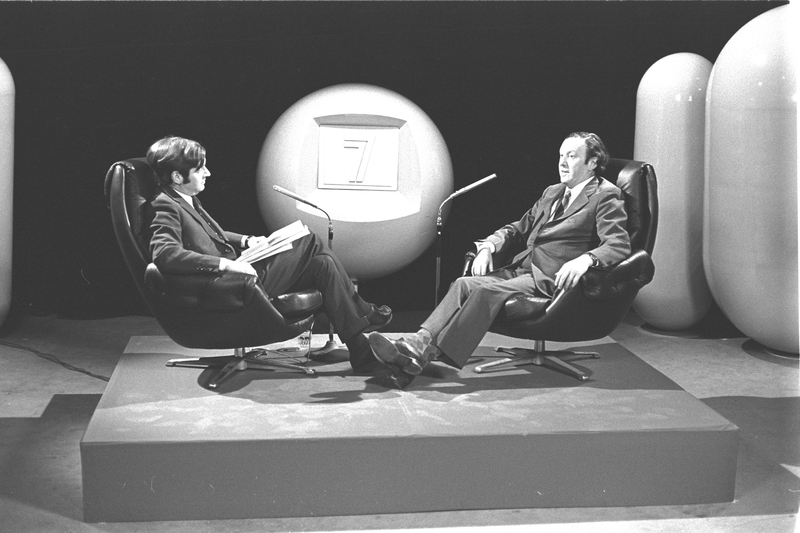
conor cruise o brien

The death has taken place of the former Cabinet minister and journalist, Conor Cruise O'Brien, who was Minister for Posts and Telegraph during the Fine Gael/Labour coalition in the 1970s. In 1939, he married Christine Foster, a liberal Belfast Protestant, but the marriage ended in divorce. Survivors include his second wife, poet Maire MacEntee, the daughter of an Irish deputy prime minister; two children from his first marriage; two children from his second marriage; and five grandchildren. His father was a journalist, literary critic and a friend of poet William Butler Yeats. He was also among his family’s “many vigorously agnostic members” and insisted on his son’s education in Protestant schools to avoid the religious influence of the majority Catholic population. Conor Cruise O’Brien, a leading Irish author, politician and diplomat who rose to international prominence while leading a United Nations mission in the troubled Congo and remained an independent, often contrarian thinker amid religious strife of his own homeland, died Thursday at his home near Dublin.

Civil Service

There had been in some quarters an expectation, based on some of the positions he had adopted in opposition, that O'Brien would repeal section 31 of the Broadcasting Authority Act (1960), which permitted the Minister to direct the RTÉ Authority 'to refrain from broadcasting any particular matter or matter of any particular class'. He quickly made plain that given the conditions that prevailed in Northern Ireland he would not abrogate the provision for a broadcasting ban. What he did was to refine the legislative regime; such was the controversy that it was as if he had introduced a form of censorship that had not previously existed. O'Brien diligently applied himself to his departmental responsibilities, but strayed into controversy, expressing himself with more explicitness or greater pungency than was either conventional or politically prudent. In February 1974 he referred to state policies on the Irish language as having created a 'bog oak monolith'. In late June 1974 his declaration that he was no longer working actively for Irish unity scandalised received opinion.

Search Obituaries & Guest Books on Legacy.com

Most notably, as a lifelong commentator on Irish politics and as a government minister in the early 1970s, he argued passionately against a united Ireland without the full consent of the Protestant north and bitterly criticized the tacit support for the Irish Republican Army then prevalent in the Republic of Ireland. With the return to power of Fianna Fail, O'Brien for a time had a good working relationship with the veteran minister for external affairs, Frank Aiken. Ireland by now was playing an active and vocal role in the UN assembly, and O'Brien was generally credited with being one of the people who formulated its policies – which included bringing on to the agenda China's admission to the UN, to the chagrin of American diplomats. His work in what is now the Democratic Republic of Congo won him the admiration of many on the political left and of leaders in newly independent African countries.
conor cruise o brien

Canada holds state funeral for Brian Mulroney, one of its most consequential prime ministers

On behalf of the Labour Party, I wish to extend my deepest sympathy to his wife Maire MacantSaoi and to his family,” Mr Gilmore added. Labour leader Eamon Gilmore said Ireland had lost “an intellectual giant and one of the most remarkable Irish public figures of the 20th century”. He said he had “marked up a huge range of achievements during his long and varied life”. "(He) was blessed with a strong intellect and he was a man of strong convictions," he said, adding that Mr Cruise O'Brien's "political views were not always in accordance with those of my own party over the years I never doubted his sincerity or his commitment to a better and more peaceful Ireland". Expressing condolences tonight, Taoiseach Brian Cowen said Mr Cruise O'Brien had been "a leading figure in Irish life in many spheres since the 1960s", displaying a wide array of talents in politics, academia and journalism.

Conor Cruise O’Brien, Irish Diplomat, Is Dead at 91

He espoused a policy of open broadcasting (involving reciprocal broadcasting arrangements between RTÉ and the BBC), but was beaten back and, after commissioning a consumer survey, endorsed the establishment of a second RTÉ television channel. This provided the backdrop to O'Brien's contest with Encounter, the glittering liberal periodical that transpired to be funded by the US Central Intelligence Agency through the Congress for Cultural Freedom. O'Brien had in 1963 challenged its agenda, and returned to the charge in his Homer Watt lecture at NYU on 19 May 1966.

Irish politician and journalist Dr Conor Cruise O'Brien dies

After serving as vice-chancellor of the University of Ghana (1962–65) and Albert Schweitzer Professor of Humanities at New York University (1965–69), O’Brien entered Irish politics. He held (1969–77) a Labour Party seat in the Dail (parliament) and then (1977–79) in the Senate, representing Trinity College, of which he was prochancellor (1973–2008). In 1979 he was named editor in chief of the British Sunday newspaper The Observer, but he left after three tumultuous years. O’Brien remained an active newspaper columnist, especially for the Irish Independent (until 2007). His books include States of Ireland (1972) and On the Eve of the Millennium (1995), as well as perceptive studies of Charles Stewart Parnell, Edmund Burke, and Thomas Jefferson. After his mother's death in 1938, he supported himself by giving "grinds" and by dabbling in journalism.

He referred to this action, which in effect formally de-recognised the legitimacy of his former wife and their children, as "hypocritical … and otherwise distasteful, but I took it, as preferable to the alternatives".[17] Mac an tSaoi was five years his junior, and the daughter of Seán MacEntee, who was Tánaiste (deputy prime minister) at the time. The couple subsequently adopted two children of Irish-African parentage, a son (Patrick) and a daughter (Margaret). Cruise O'Brien was hung out to dry by his UN boss Hammarskjöld, while his political masters in Ireland tried to wash their hands of the whole debacle. It has since emerged that while the Irish government was providing a monthly analysis of events in the Congo to members of the cabinet and some senior politicians, they weren't sharing this key information with Irish officers on the ground there.

Conor Cruise O'Brien caused 'cultural transformation' in Ireland, symposium hears - The Irish Times

Conor Cruise O'Brien caused 'cultural transformation' in Ireland, symposium hears.

Posted: Sat, 04 Nov 2017 07:00:00 GMT [source]

conor cruise o brien

Her father, Alec Foster, was a liberal Derry presbyterian, her mother a Lynd who was a sister of the essayist Robert Lynd (qv). O'Brien and Christine began a relationship, and were married in the registry office in Dublin on 20 September 1939, before they commenced their fourth year at Trinity. He was very fond of Alec Foster, and it was under his auspices that O'Brien had his first experience of Northern Ireland, where he taught for a couple of months in the spring of 1939 at the Belfast Royal Academy, of which Foster was head. Mr. O’Brien, determined to take decisive action, ordered in United Nations troops, but the operation ended in disarray.

His appointment to take titular charge of the Observer in January 1978 was certainly an adventurous one. The great press panjandrum of the period - he had been chairman of the Newspaper Publishers' Association, as well as presiding over the Observer Trust - Goodman lived in some style, surrounded by all the appurtenances of wealth and status. As ill-luck would have it, on arriving at the apartment block's imposing entrance, Conor contrived to press the wrong bell.

His last public appearance was on 7 September 2006 to deliver an address on the ninetieth anniversary of the death of T. M. Kettle, in the old house of lords chamber of the Bank of Ireland on College Green. His own ninetieth birthday was the occasion of a last large rallying of family and friends at Whitewater. His funeral was at the church of the Assumption in Howth, and he was interred in Glasnevin. Convinced that the pursuit of a negotiated settlement in Northern Ireland which involved the IRA and Sinn Féin was a propitiation of terrorism and a reverse oppression of Northern protestants, O'Brien pitted himself against the John Hume–Gerry Adams convergence course of Irish and British government policy in relation to the North.

But while the Belgians cut their official ties, they didn't stray far, bent on extracting further great profits from the region's abundant natural resources. Given strong Belgian encouragement, one of the richest provinces, Katanga, decided that it would fare better on its own, outside the newly-founded Democratic Republic of Congo. After the newly-independent Congo Republic elected a pro-Soviet leader, the Western powers piled in on the side of breakaway Katanga as the Congo became the latest theatre of hate in the Cold War. He resurfaced as a writer and playwright, an outspoken Irish Independent columnist, and as Minister for Posts & Telegraphs in the 1970s he reinforced Section 31 of the Broadcasting Act banning supporters of militant republicanism from the airwaves. He also bequeathed the English language a new word, Gubu, describing foe CJ Haughey's car crash 1982 administration as "Grotesque, unbelievable, bizarre and unprecedented". During the interview, Kreisler asked if, as a politician and a writer, O'Brien were ever torn between rationality and emotions about specific issues.

His understanding of Parnell's strategy was acute, and he elucidated the respective roles of his lieutenants, each of whom he brilliantly characterised. While he had when young been somewhat dismayed by David Sheehy's adherence to the anti-Parnellites, his conclusion on the Parnell split of 1890–91 was measuredly adverse to the Irish leader. It has been suggested that Hammarskjold's knowledge of and admiration for Maria Cross, a volume of critical essays that O'Brien published in 1952 under the pseudonym of Donat O'Donnell, was influential in his decision to ask O'Brien to serve on his executive staff.Under Hammarskjold, O'Brien was assigned to over-see U.N. Operations at Katanga in the Congo in 1961, a time of violent political upheavals. Later that year he was relieved of these duties at his own request and resigned from the foreign service altogether.

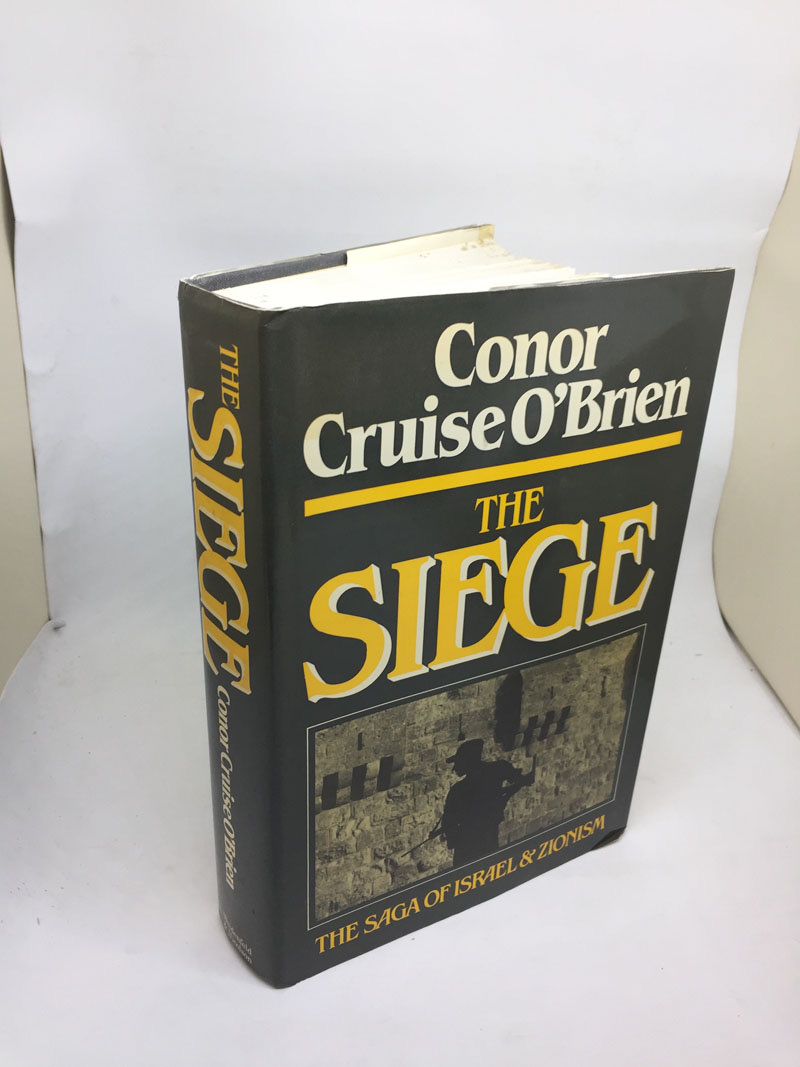
His essays and occasional pieces also contain some excellent literary criticism, without the contemporary polemics that intrude into so much of what he wrote and said. But then, polemics and O'Brien could seldom be kept apart for long, and public controversy and debate seemed to answer a fundamental demand of his nature. In 1987 he was embroiled in controversy again, this time as a result of a visit to South Africa, where his lectures at the University of Cape Town angered black students. However, as his writings show, O'Brien was no friend to racial (or racist) policies, and his 1986 book on Israel, The Siege, was characteristically independent in its viewpoint. He was then appointed Albert Schweitzer Professor of Humanities at New York University, a position he held until 1969. He supported the right of the Vietnamese people to use violence against US armed forces.

Conor Cruise O'Brien was never pro-apartheid - The Guardian

Conor Cruise O'Brien was never pro-apartheid.

Posted: Fri, 03 Aug 2012 07:00:00 GMT [source]

Perhaps his nearest equivalent were French intellectuals such as Jean Paul Sartre and Albert Camus. O'Brien, as with many Irishmen of his generation, was deeply influenced by French culture. His early essays on contemporary French writers, especially the neo-Catholic novelists of the 1940s such as François Mauriac, first brought him into the public eye, though they were written under the pseudonym Donat O'Donnell. Later he used the title of a Mauriac novel for his book Maria Cross, which dealt largely with those writers and the intellectual and moral dilemmas with which they wrestled.

The request was declined, but renewed at the end of May without referring to the Congo. O'Brien left Dublin for New York on 27 May, and left New York for the Congo, via Brussels and Paris on 8 June, reaching Élisabethville on 14 June to take up his responsibilities as the representative of the UN secretary general in Katanga as part of ONUC (Organisation des Nations Unies au Congo). "Conor was a leading figure in Irish life in many spheres since the 1960s. It is a reflection on his wide array of talents that he was able to make a sizeable impact in the public service, in politics, in academia and journalism," Cowen said. With the defeat of the coalition, Mr. O’Brien became editor in chief of The Observer, the London Sunday newspaper. For the two years he occupied the post, it gave him a platform from which to write polemical articles on politics and to indulge his passion for literature and history. Conor Cruise O’Brien (born November 3, 1917, Dublin, Ireland—died December 18, 2008, Howth, near Dublin) Irish diplomat, politician, educator, and journalist who was one of Ireland’s most provocative political and intellectual figures.

Sunday, March 31, 2024

Conor Cruise O'Brien: The Irishman at heart of Congo siege

conor cruise o brien

(He wrote to Claud Cockburn on 15 April 1966 of Melvin J. Lasky, the driving force of Encounter, that 'Lasky I regard as a sort of cultural cold war conman'.) Encounter retaliated with a comparison of its accuser with Senator Joseph McCarthy. O'Brien wrote a reply for the New Statesman, which, when threatened with a libel suit, pulled the article. He issued libel proceedings in Dublin, which Encounter settled on the day of the hearing in February 1967. O'Brien first attended Miss Haines, a protestant preparatory school, but transferred to the Dominican nuns in Muckross on Marlborough Road before his first communion. If that reflected his father's wishes, his taking Irish rather than Greek as he had wanted to conformed to his mother's. From our tiny island of Enlightenment (haskala), we could peer out into that possibly enviable fog' (ibid., 19).

Holy War Against India

O’Brien was a dramatist, newspaper editor and prolific contributor to the Atlantic, the New York Review of Books and other publications. O'Brien added lustre to the Observer, but the division of authority between editor and editor-in-chief was operationally fraught. O'Brien had a dispute with the distinguished journalist Mary Holland (qv), who was the paper's Irish correspondent, in relation to a feature on a republican family in Derry, in which he wrote to her that he thought it 'a serious weakness in your coverage of Irish affairs that you are a very poor judge of Irish catholics. That gifted and talkative community includes some of the most expert conmen and conwomen in the world and in this case I believe you have been conned.' Holland resigned, rejoining the paper after O'Brien's departure (O'Toole, Magill (June 1986)). When de Valera returned to power at the 1951 general election, Frank Aiken (qv) became minister for External Affairs. O'Brien remained in charge of the Irish News Agency, which had a diminished role under Aiken, and became the department's link to the nationalist community in Northern Ireland, to which he made a number of visits.

Israeli strikes intensify across Gaza as fresh evacuations ordered in north of enclave

In an undergraduate career marked by intense pre-examination sprints rather than the steady pace favoured by his friend and rival Vivian Mercier (qv) (whom he consistently 'pipped'), he won great distinction. In his first year he won a foundation scholarship, and thereafter the unusually remunerative Hutchinson Stewart literary scholarship. Once described by the social critic Christopher Hitchens as “an internationalist, a wit, a polymath and a provocateur,” Mr. O’Brien was a rare combination of scholar and public servant who applied his erudition and stylish pen to a long list of causes, some hopeless, others made less so by his combative reasoning.

EDITOR

conor cruise o brien

The party included Brian Urquhart, soon to succeed O'Brien in Katanga, who was bloodied with a rifle butt and dragged away along with two others. Manhandled, Máire MacEntee acted with calm and resourcefulness, no less than O'Brien's driver, Private Paddy Wall. He wrote, still as Donat O'Donnell, for Commonweal in the US and reviewed for the Spectator and the New Statesman in England. He completed his doctoral thesis on Charles Stewart Parnell (qv) and his party.

conor cruise o brien

He, therefore, ‘reluctantly’ offered his resignation as ‘spokesman on Foreign Affairs’.Footnote 82 In fact, Halligan and his colleagues never met Callaghan in an official capacity. Nor did they hold any official meetings with ‘any Labour Party officials’, as pointed out by Corish in reply to O'Brien's letter of resignation. Rather, Corish had run into Callaghan ‘by accident’ in the hotel that the former was staying in.Footnote 83 Following much arm twisting, which included the personal intervention of Frank Cluskey, O'Brien rescinded his letter of resignation.Footnote 84 The signs, however, were ominous.

O'Brien was in his 40s when he entered into the most fateful and controversial chapter of his life – his posting to the Congo (now the Democratic Republic of the Congo) by the direct initiative of Dag Hammerskjold, then secretary-general of the UN. He arrived in Elizabethville, the capital of Katanga province, in June 1961 to find himself in the epicentre of an international hotbed. The secession of Katanga, the murder of the first prime minister Patrice Lumumba (often ascribed to European-paid mercenaries), the dubious role of Union Minière, made the front pages of the world press for months on end. In the end O'Brien, apparently acting on what he thought was a UN resolution, ordered the UN peacekeeping force into action against the mercenaries and against Katanga's secession. The crisis became semi-farcical when the poet Máire MacEntee (daughter of a Fianna Fail minister) arrived to join him and declare her support. At the end of 1955, O'Brien's direct involvement in the Irish government's anti-partition campaign ‘ceased’, following his appointment to the Irish embassy in Paris, as a counsellor.Footnote 40 The following year, he was appointed the head of the United Nations section of the D.E.A. in Dublin, reporting to Fredrick H. Boland in New York.

Save article to Google Drive

If this is the first time you used this feature, you will be asked to authorise Cambridge Core to connect with your Dropbox account.Find out more about saving content to Dropbox. 47 O'Brien first came into direct contact with the Northern Ireland civil rights movement in late October 1968 when he addressed a gathering at Queen's University Belfast on the subject of ‘Civil disobedience’ (O'Brien, States of Ireland, p. 152). For further analysis of O'Brien's attitude to the civil rights campaign in Northern Ireland, see Whelan, Conor Cruise O'Brien, pp 134–40. In a complex arrangement promoted by David Astor, who had relinquished ownership of the Observer to Robert Anderson of Atlantic Richfield, and brokered by Arnold Goodman, O'Brien was appointed editor-in-chief of the Observer, with Donald Trelford remaining editor. By the following month it was decided O'Brien would contest Dublin North-East, which encompassed Howth, and he was quickly inducted into the Howth branch of the party.

Katanga, 1961

Politically O'Brien's principal contribution to Irish politics lies in his sustained attack in the 1970s on the terrorism of the IRA, and on the moonlit penumbra of condonation and evasiveness that surrounded it in southern politics. He understood that this had to be an assault of great intellectual clarity and measured passion, and consciously situated his argument in the line of great controversies from the fall of Parnell, something conveyed in the presence of Yeats in what he wrote and said. It was important for this that he should have been a member of Dáil Éireann in 1969–77 and of the Irish government of 1973–7. It is difficult to convey now the ferocity of the intellectual ferment that this generated, or its salutary consequences for democratic politics in the Irish state.

Against some sharp cavilling from Robin Dudley Edwards (qv) as extern examiner, he was awarded a doctorate in 1953. His thesis was published as Parnell and his party by the Clarendon Press in 1957. Historiographically it was almost revolutionary in its critical analysis, acuteness of insight and scholarly dispassion. O'Brien was conscious of the transition from oral remembrance, dedicating the book to the memory of David Sheehy and Henry Harrison (qv), the two survivors of Commitee Room 15 he had known.

He was wafted up in a lift, only to find himself confronted by a modern-day equivalent of Oscar Wilde's Lady Bracknell. "I assume," this apparition remarked, after looking him up and down with some distaste, "you must be someone to see Lord Goodman." To Conor it felt as if the floor had opened and swallowed him up. "But I learnt one lesson - that my place in the English social order would never be secure." To save this article to your Google Drive account, please select one or more formats and confirm that you agree to abide by our usage policies. If this is the first time you used this feature, you will be asked to authorise Cambridge Core to connect with your Google Drive account.Find out more about saving content to Google Drive. To save this article to your Dropbox account, please select one or more formats and confirm that you agree to abide by our usage policies.

Christopher Hitchens · The Cruiser - London Review of Books

Christopher Hitchens · The Cruiser.

Posted: Thu, 22 Feb 1996 08:00:00 GMT [source]

O’Brien spent much of his early career in the Irish foreign office, and his experiences in Congo in 1961 transformed him into a widely known public figure. He had gone to Africa to prevent the secessionist effort in Congo’s mineral-rich Katanga province. He drew attention for his accusations that several European countries, including Britain, were tacitly in favor of the secessionist effort. He also accused the Congo’s interior minister of a “murderous conspiracy” against U.N. He was the most commendable of colleagues, holding us all rapt in local hostelries as his voice rose by something like an octave as the glasses piled up in front of him.

From an interview with Harry Kreisler that appears on the University of California at Berkeley Web site, one gets a brief glimpse at those contradictions and its effect on O'Brien's career. His mother was a strong Irish Catholic; his father (whom O'Brien—at the age of ten—watched die) was an agnostic who disapproved of Catholic education. "One third of the pupils were people of Catholic origin like myself, but somewhat detached from that background," O'Brien commented to Kreisler. Later, as a vocal intellectual, he saw no place for Sinn Fein, the IRA’s political wing. He was strident about political self-determination and saw no real hope or need of a united Ireland, noting that the 1 million or more Protestants in the north had no interest in joining the Irish Republic.

Conor Cruise O'Brien - The Telegraph

Conor Cruise O'Brien.

Posted: Fri, 19 Dec 2008 08:00:00 GMT [source]

At a 1967 Vietnam War symposium O'Brien clashed with Hannah Arendt, who had remarked, "As to the Viet Cong terror, we cannot possibly agree with it". O'Brien responded, "I think there is a distinction between the use of terror by oppressed peoples against the oppressors and their servants, in comparison with the use of terror by their oppressors in the interests of further oppression. I think there is a qualitative distinction there which we have the right to make." Lumumba had been trying to solicit Soviet support for his military campaign to stop Katanga breaking away, which drew the wrath of the United States. One reason given for the interference of the western powers was that they feared the Soviets would exploit the Congo's rich uranium deposits for making nuclear weapons. Washington, Westminster and Brussels have all been implicated in Lumumba's execution at the hands of a firing squad assembled by the Katangan authorities. The man who would become widely known as 'The Cruiser' grew up in the Dublin suburb of Rathmines, the son of a journalist father and a crusading feminist writer mother.

Saturday, November 4, 2023

List Of Light Pink Diamond Ring Ideas

List Of Light Pink Diamond Ring Ideas. Web reba mcentire, 68, says she and rex linn, 67, are not engaged despite the voice coach wearing a massive diamond ring on her finger. Explore april birthstone earrings in studs, hoops and more.

ChristiesPearShapedFancyLightPinkDiamondRing
ChristiesPearShapedFancyLightPinkDiamondRing from www.thejewelleryeditor.com

Solitaire engagement rings are a classic, elegant design comprised of a band and one. Web each different intensity grade of pink diamonds. Web be captivated by the romance of natural pink diamonds—some of the rarest and most beautiful precious gems.

Friday, November 3, 2023

Famous Artichoke Light Fixture References

Famous Artichoke Light Fixture References. An iconic design that is truly timeless, the ph artichoke is a beautiful addition to every home. Web the artichoke pendant is a light fixture originally designed by poul henningsen in 1958.

Vintage Artichoke Style Light Fixture 2
Vintage Artichoke Style Light Fixture 2 from shop.housingworks.org

The fixture provides decorative and comfortable lighting. Ceiling fixture, white by design living (1) $183. Web check out our artichoke light fixture selection for the very best in unique or custom, handmade pieces from our pendant lights shops.

Thursday, November 2, 2023

Cool Bontrager Bike Lights Ideas

Cool Bontrager Bike Lights Ideas. Web bontrager lights filter colour stock availability brand categories price range more filters (1) sort by: They're powerful, easy to install, and compatible with all bikes.

Bontrager Ion 120 Front Bike Light
Bontrager Ion 120 Front Bike Light from www.als.com

Web shop bontrager bike headlights and tail lights. A compact and powerful usb rechargeable rear bike light. 88 ads now au$48.74 au$64.99 bontrager ion 120/flare 1 light set black 2023 berwick.

Wednesday, November 1, 2023

Cool Thank You For Hosting My Wedding Shower Ideas

Cool Thank You For Hosting My Wedding Shower Ideas. Ad 1000+ wedding thank you cards that can be customized online with your text & colors. My best friend is having a.

Bridal Shower Hostess Thank You Gift, Thank You for Hosting Bridal Shower, Hostess Gift Br
Bridal Shower Hostess Thank You Gift, Thank You for Hosting Bridal Shower, Hostess Gift Br from www.pinterest.com

It was very generous and we appreciate you thinking of us. Your smile and positive energy added an extra special touch to this day. Web up to 2% cash back brides and grooms, listen up.

Review Of White Bic Lighter 2023

Review Of White Bic Lighter 2023. By alli patton 9 months ago. The pot smokers will agree with me.

4imprint.co.uk BIC® J26 Lighter 502974
4imprint.co.uk BIC® J26 Lighter 502974 from www.4imprint.co.uk

The genesis of the curse being that jimi hendrix, janis joplin and jim morrison were all habitual marijuana users had died from overdoses (obviously not. It is said to be bad luck charm to carry a disposable white bic, it shows the ashes of the demons. Web behind the curse of the white lighter.

17 Best Leave In Conditioners Tested & Reviewed for 2024

Table Of Content Best Lightweight Leave-In Conditioner Best for Heat Protection How we picked the best leave-in conditioners The 16 Best Con...